Siding
Should You Repair or Replace Your Siding in New Jersey?
Not all siding damage means a full replacement. Here's how to tell the difference and make the right call for your New Jersey home.
Not all siding damage means a full replacement. Here's how to tell the difference and make the right call for your New Jersey home.
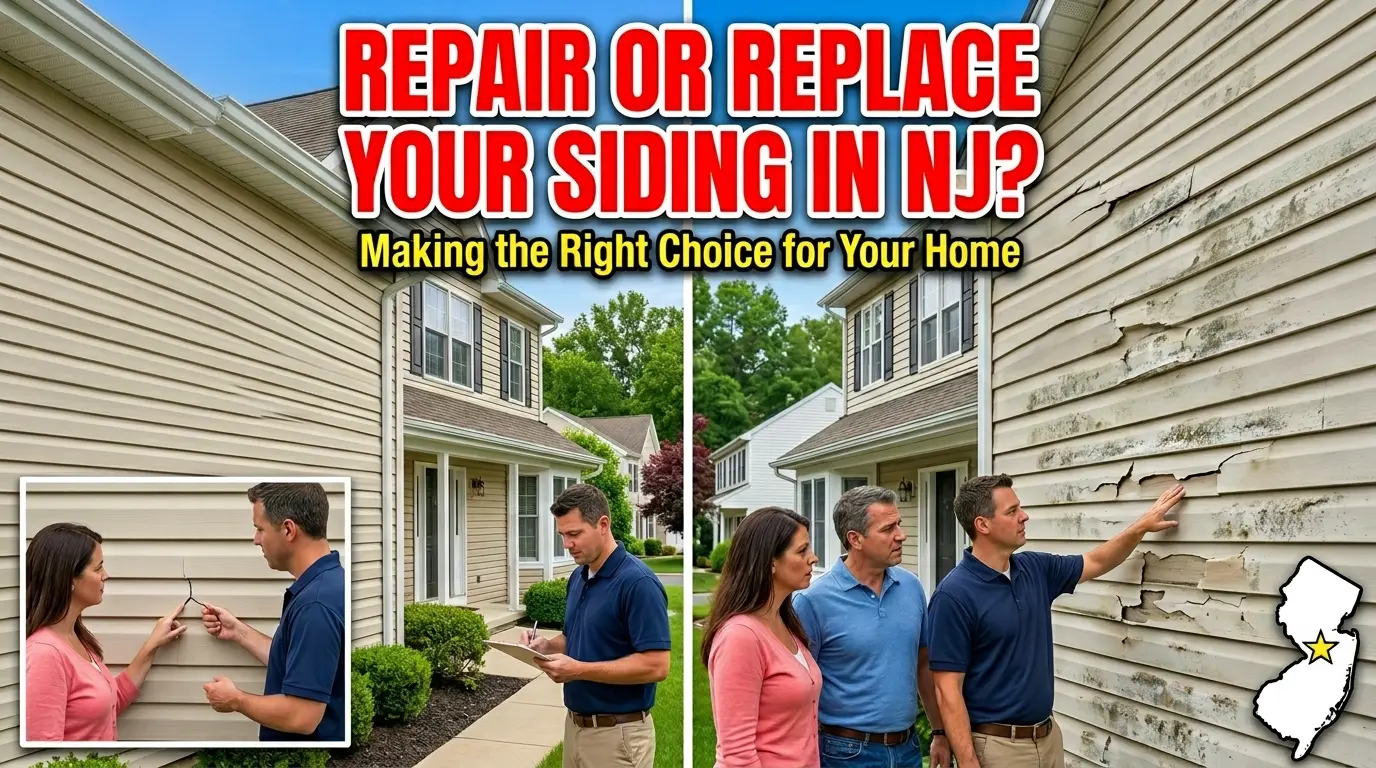
When your siding starts showing damage, the first question is almost always the same: do I need to replace the whole thing, or can I get away with a repair? It's a fair question, and the honest answer is that it depends. Not every damaged panel means a full replacement, but not every problem is worth patching either.
The right call usually comes down to a few key factors — how widespread the damage is, how old the siding is, and what's going on underneath. In this guide, we'll walk through both options so you can make a smart decision for your New Jersey home.
If the damage is isolated — a few cracked panels, a section that took a hit from a branch, or some loose pieces after a storm — a repair is usually the right move. Good repairs cost less and cause less disruption. The key is that the rest of the siding needs to be in solid shape.
A repair also makes sense when the siding is relatively new. If it's only a few years old and in otherwise good condition, there's no reason to replace what's working. A skilled contractor can match the existing material closely enough that the repair blends in.
If the damage shows up in multiple places across the home, that's usually a sign the siding has run its course. Widespread cracking, warping, or fading means the material is failing overall, not just in one spot. Patching it repeatedly ends up costing more than a single replacement over time.
Age matters here too. Older siding can also fade unevenly, so even good repairs look mismatched. And if moisture has gotten behind the siding, you may be dealing with rot or damaged sheathing that a surface repair won't fix. In those cases, full replacement protects your home and gives you a fresh, consistent look.
One thing homeowners often miss is what's happening behind the siding. Siding's main job is to keep water out, so when it fails, moisture can reach the sheathing and framing. Signs of trouble include soft spots, bubbling paint inside, a musty smell, or visible water stains.
This is why a good contractor inspects the wall, not just the surface, before recommending a repair or replacement. Catching moisture damage early can save you from a much bigger and more expensive project later. Learn more about our siding services in New Jersey.
The decision really comes down to three questions: how much of the siding is damaged, how old is it, and what's going on underneath. If it's a small, recent issue on otherwise solid siding, repair it. If the siding is old, failing in multiple spots, or hiding moisture damage, replacement is the smarter long-term move.
The best way to decide is an honest inspection and a written estimate that lays out both options. You shouldn't feel pushed toward the more expensive choice. At J&C Powerbuild, we'll tell you straight whether a repair will do or whether replacement is the better value on your New Jersey home.
Look for cracking, warping, fading, or loose panels across the whole house. Widespread damage or hidden moisture usually means it's time to replace rather than repair.
A repair costs less upfront and works well for small, recent damage. But repeatedly patching old siding often costs more over time than one full replacement.
Often, yes. If the material is still available, we match the color and style so the repair blends in. If it's discontinued, replacement may be the better path.
Failed siding can let moisture reach the sheathing and framing, causing rot. That's why we inspect the wall before deciding to repair or replace your siding in New Jersey.
A small repair can be quick, while a full replacement usually takes a few days. We'll give you a clear timeline in your written quote.
Not sure whether to repair or replace your siding? J&C Powerbuild will take a look and give you an honest estimate.